




Blog / MY Chevrolet Service

Essential Chevrolet Maintenance: What Salinas Drivers Should Know

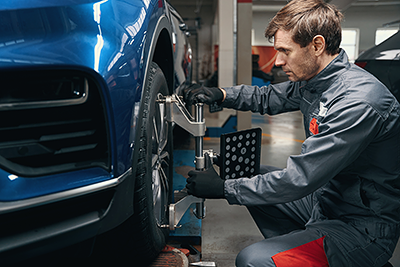
wheel alignment at My Chevrolet in Salinas

Essential Chevrolet Maintenance: What Salinas Drivers Should Know

Your Chevrolet may be built for thousands of miles of commuting, errands, family trips, and California highway driving, but longevity still depends on what happens between those miles. At MY Chevrolet in Salinas, CA, we help Chevrolet owners stay ahead of routine maintenance with professional service designed around their vehicle and its specific needs.
Oil changes tend to receive most of the attention. They matter, certainly. Yet proper vehicle maintenance encompasses considerably more: tires, brakes, batteries, fluids, filters, and other components all influence how a Chevrolet performs as mileage accumulates.
Whether you drive a Silverado, Equinox, Traverse, Tahoe, Trailblazer, Colorado, or another Chevrolet model, understanding a few fundamental maintenance areas can help you recognize when it is time to visit a Chevrolet service center in Salinas, CA.

Oil Changes: Start With the Lifeblood of Your Engine

Engine oil has an arduous job. It lubricates internal engine components, helps reduce friction, assists with temperature management, and collects contaminants as it circulates. Over time, however, the oil and filter require replacement.
Rather than relying exclusively on an arbitrary mileage number, many modern Chevrolet vehicles use the Engine Oil Life System to help determine when an oil change is necessary based on vehicle operating conditions.
When the CHANGE ENGINE OIL SOON message appears, Chevrolet recommends having the oil and filter changed within the next 600 miles.
Driving habits matter, too. Frequent short trips, extensive idling, towing, and other demanding operating conditions can affect maintenance needs. Checking your Chevrolet Owner's Manual remains important because requirements can vary by model, engine, and application.
At MY Chevrolet, our service team can perform oil and filter changes while helping you stay informed about other maintenance your vehicle may require.

Don't Overlook Your Chevrolet's Brakes

Few vehicle systems deserve more attention than the brakes.
Brake components endure repeated friction every time you slow your vehicle, and gradual wear can make changes difficult to notice immediately. Drivers should therefore remain attentive to unusual braking behavior.
Squealing or grinding noises deserve attention. So does a change in pedal feel, unusual vibration while braking, or a vehicle that seems to require more distance to stop than it previously did.
The solution is not to guess which component has worn. A professional brake inspection can help determine the condition of the pads, rotors, and related components before deciding what service is appropriate.
For Salinas drivers dealing with a mixture of local streets, stop-and-go traffic, and longer highway trips, keeping the braking system properly maintained should remain a priority throughout vehicle ownership.

Tires Affect More Than the Way Your Chevrolet Looks

Four relatively small patches of rubber connect your Chevrolet to the pavement. Their condition has consequences.
Proper tire maintenance can influence handling, braking performance, ride quality, and tire longevity. That makes tire pressure, tread condition, alignment, and rotation worthy of regular attention.
Chevrolet recommends checking tire pressure when the tires are cold and using the recommended pressure shown on the vehicle's Tire and Loading Information label rather than relying on the maximum pressure printed on the tire itself.
Tread wear also deserves scrutiny. Uneven wear can sometimes indicate that rotation, balancing, alignment, suspension inspection, or another service may be appropriate.
At MY Chevrolet in Salinas, our service department can inspect your tires and help determine whether maintenance or replacement should be considered.

Your Battery Doesn't Always Give Much Warning

A vehicle battery can seem perfectly adequate—until one morning it isn't.
Slow engine cranking, intermittent electrical behavior, difficulty starting, or visible corrosion around the battery terminals can indicate that the battery or charging system deserves attention. Age can matter as well, particularly when a battery has endured years of repeated starting and temperature changes.
A battery test can provide useful information about its current condition rather than leaving you to discover a weakening battery when the vehicle refuses to start.
Battery health becomes particularly important in modern Chevrolet vehicles because electrical systems support considerably more than ignition. Infotainment, driver-assistance equipment, lighting, climate functions, cameras, sensors, and numerous control modules depend upon a properly functioning electrical system.

Fluids and Filters Quietly Do Important Work

Not every critical maintenance component announces itself from the driver's seat.
Your Chevrolet contains multiple fluids and filters designed to protect components or support important vehicle systems. Depending on the model and powertrain, maintenance considerations can include engine coolant, brake fluid, transmission fluid, engine air filters, and cabin air filters.
The engine air filter helps prevent contaminants from entering the engine's air intake. The cabin air filter serves an entirely different purpose, helping filter air entering the passenger compartment through the climate-control system.
Fluid requirements and service intervals vary considerably among Chevrolet vehicles, which is why maintenance should follow the schedule and specifications appropriate to the individual model rather than a universal checklist.

Silverado and Colorado Owners Should Consider How They Use Their Trucks

A Chevrolet truck that spends its life commuting has a different routine from one that regularly tows.
Owners of the Chevrolet Silverado 1500, Silverado HD, and Colorado should consider workload when thinking about maintenance. Towing, hauling, off-road driving, extended idling, and commercial use can place different demands on a truck than comparatively gentle highway transportation.
That makes maintenance history particularly important for hardworking pickups.
Owners should monitor oil life, tire condition, brakes, fluids, and other scheduled maintenance while consulting the Owner's Manual for requirements associated with their specific truck and operating conditions.
The more demanding the work, the less sensible it becomes to ignore maintenance until something feels wrong.

Watch Your Dashboard—Your Chevrolet Is Trying to Tell You Something

Modern vehicles are remarkably communicative.
Oil-life messages, the Tire Pressure Monitoring System, warning lamps, and other dashboard notifications can alert drivers to conditions requiring attention. A warning light does not always tell you exactly which repair is necessary, but it does provide a reason to investigate.
The Check Engine Light is an obvious example. Numerous conditions can illuminate it, ranging from relatively straightforward issues to faults requiring more immediate diagnosis.
Rather than replacing parts based on conjecture, proper diagnostics can identify trouble codes and give a technician a starting point for determining the underlying problem.
If a warning appears unexpectedly, consult your Chevrolet Owner's Manual for guidance and arrange service when appropriate.

Why Choose MY Chevrolet for Chevrolet Service in Salinas, CA?

Vehicle maintenance is easier to manage when you have a service center familiar with the vehicle sitting in your driveway.
At MY Chevrolet, our service department supports Chevrolet owners throughout Salinas and the surrounding area with routine maintenance and automotive repair services. Chevrolet-certified service gives owners access to technicians familiar with Chevrolet vehicles, along with GM Genuine Parts and ACDelco parts for applicable repairs and maintenance.
Drivers can also schedule service online, making it easier to plan maintenance around work, family obligations, and daily life.
Whether your Chevrolet needs an oil change, tire service, brake attention, battery service, scheduled maintenance, or diagnosis of an unexpected concern, addressing the issue promptly can help prevent a relatively manageable service need from becoming something more disruptive.

Schedule Chevrolet Service at MY Chevrolet in Salinas, CA

A dependable vehicle is rarely the product of neglect.
Routine maintenance gives your Chevrolet the attention it needs as mileage accumulates, whether you drive a Silverado to the jobsite, an Equinox through your daily commute, a Traverse filled with family, or a Tahoe on longer California journeys.
At MY Chevrolet in Salinas, CA, we are here to help you maintain your Chevrolet throughout its life on the road. Staying current with oil changes, tires, brakes, batteries, filters, fluids, and manufacturer-recommended maintenance can help preserve the performance and dependability you expect from your vehicle.
When your dashboard says it is time—or when something simply does not feel quite right—schedule a service appointment with MY Chevrolet and let our Salinas service team take a closer look.

Posted in:

Related Posts

Mechanic repairing car engine.

Chevrolet Service Guide: When Should You Replace Your Brakes, Tires, Battery and Fluids?

It’s not how anyone in Salinas, California wants to spend their free time, but it’s got to get done. Keeping your Chevrolet running at its best means staying on top of routine maintenance instead of letting easily handled issues become something bigger. Whether you drive a Silverado, Equinox, or Trax, understanding when to replace key components can save you money and prevent unexpected breakdowns. This Chevrolet service guide walks you through the essentials — brakes, tires, battery, and fluids — so you always know what to watch for. When to Replace Your Brakes Brakes are the most critical safety system on your vehicle, and you should pay c lose attention to warning signs that they’re in need of help. Brake pads typically need replacement every 30,000 to 70,000 miles, depending on your driving habits and vehicle type. Listen for squealing or grinding noises when you apply the brakes. If your steering wheel vibrates during braking, or if your vehicle pulls to one side, those are signs your brakes need attention. Don't wait until you hear metal-on-metal contact — by that point, rotors may need replacement too, which is a costlier repair. When to Replace Your Tires Tires affect your safety, fuel efficiency, and overall ride quality. The general recommendation is to replace tires every 6 years or when the tread depth reaches 2/32 of an inch, whichever comes first. As part of your routine, check your tires monthly for uneven wear, cracks, or bulges in the sidewall. If you off-road, tow a lot, spend time in stop-and-go traffic, or have dealt with extreme heat, your tires might be feeling it. An easy way to test tread depth at home is the penny test — insert a penny into the tread with Lincoln's head facing down. If you can see the top of his head, it's time for new tires. Also, be sure to rotate your tires every 5,000 to 7,500 miles to promote even wear and extend their lifespan. When to Replace Your Battery A car battery typically lasts 3 to 5 years. If your Chevrolet is slow to start, the lights seem dim, or t he dreaded battery warning light shows up on your dashboard, have your battery tested. Cold weather can also reduce battery performance, so getting a test done before winter is a smart habit. We suggest having your battery inspected during every oil change — which means don’t miss your oil changes. Catching a failing battery early prevents the frustration of being stranded with a vehicle that won't start. When to Change Your Fluids Fluids are the lifeblood of your vehicle, and each one has its own replacement schedule. Here's a quick breakdown of the most important ones: Engine oil should typically be changed every 5,000 to 7,500 miles, though many newer Chevrolet models use full synthetic oil and can go longer between changes. If your vehicle has an Oil Life Monitoring System, that takes your driving habits into account, as well as driving conditions for a more accurate depiction of what your car needs. Your coolant should be flushed every 30,000 miles or so to prevent overheating. Brake fluid absorbs moisture over time and should generally be replaced every 2 years. Transmission fluid, power steering fluid, and windshield washer fluid should all be checked regularly and topped off or replaced as needed. Following this Chevrolet service guide for fluid maintenance keeps your engine running smoothly and helps prevent long-term damage to critical components. Visit Us in Salinas, CA for Expert Chevrolet Service Staying current with maintenance doesn't have to be complicated. By following this Chevrolet service guide, you can protect your investment and drive with confidence every day. Drivers throughout Salinas, CA, can count on the certified service team at MY Chevrolet to handle everything from brake inspections to fluid changes with care and expertise. Visit us to schedule your next service appointment today.

Center console of a vehicle showing a rotary drive mode selector knob

What Your Chevy Equinox Service Indicators Are Telling You

Glancing at your Chevrolet Equinox dashboard and seeing an unfamiliar warning light can cause concern. Understanding your Chevy Equinox service indicators helps you stay ahead of routine maintenance and avoid unexpected repairs. As a new Chevy owner or a longtime driver, reaching out to Salinas Chevy Dealership in Salinas, CA, for guidance will keep your vehicle running reliably. This guide walks you through the most common dashboard lights and the appropriate actions to take. Oil Life Monitor and Oil Change Alerts The oil life monitor alert is one of the most routine Chevy Equinox service indicators. The "Change Engine Oil Soon" display means your oil requires replacement. The Equinox uses an intelligent system to calculate necessary oil changes based on your driving habits, mileage, and conditions, avoiding reliance on a strict mileage interval. You can reset this alert through the vehicle settings menu after an oil change. Ignoring this indicator increases engine wear over time. Tire Pressure Warning Light The tire pressure monitoring system, or TPMS, triggers a dashboard light when a tire falls below the recommended inflation level. Drivers frequently see this Chevy Equinox service indicator during seasonal temperature changes. Low tire pressure negatively affects handling, fuel efficiency, and tire longevity. When this light appears, check the inflation of each tire and add air accordingly. If the light remains on, have a technician inspect the system for a slow leak or a faulty sensor. Check Engine Light The check engine light remains a widely misunderstood service indicator. On the Chevy Equinox, it signals varied issues, ranging from a loose gas cap to a serious emissions system problem. A solid amber light typically indicates a non-urgent issue requiring a check soon. Conversely, a flashing check engine light signifies an immediate concern demanding prompt service. Diagnosing the vehicle with a scan tool easily identifies the root cause. Knowing the proper service intervals for your Chevy SUV reduces the likelihood of this light appearing. Brake System and Battery Indicators Drivers must never ignore the brake and battery warning lights. The brake system indicator signals low brake fluid, worn brake pads, or an anti-lock brake system fault. If this light illuminates while driving, safely reduce your speed and seek an immediate vehicle inspection. The battery warning light highlights a charging system problem, often involving the alternator, battery, or related wiring. Addressing these Chevy Equinox service indicators quickly prevents unexpected breakdowns. How Often Should You Service Your Chevy Equinox? Understanding your Chevy SUV service intervals is vital for vehicle health. You should schedule oil changes and tire rotations every 5,000 to 7,500 miles, depending on your driving conditions and the oil life monitor. Technicians need to perform brake inspections, cabin air filter replacements, and multi-point vehicle inspections at least annually. Adhering to a consistent service schedule optimizes Equinox performance and extends its lifespan. Visit Us in Salinas for Equinox Service Monitoring your Chevy Equinox service indicators remains a stress-free process. Familiarizing yourself with dashboard warnings and maintaining a regular service schedule protects your investment and ensures confident driving. Drivers throughout the area can visit Salinas Chevy Dealership in Salinas, CA, to have trained technicians inspect, diagnose, and service their Equinox. Prevent small issues from escalating by contacting our service center to schedule your next appointment today.

2027 Chevrolet Traverse

2027 Chevrolet Traverse Seating Capacity: Room for the Family and Everything Else

Family transportation presents a peculiar engineering challenge. You need enough seats for everyone, space for their belongings, and preferably a vehicle that doesn't require its own parking postcode. The 2027 Chevrolet Traverse makes a convincing case with seating for up to 8 passengers and nearly 100 cubic feet of maximum cargo space. For families around Salinas, CA, its seating arrangements deserve a closer examination. Seven or Eight Seats? It Depends on the Trim The Traverse accommodates 7 or 8 passengers across three rows. LT models offer an available second-row bench, providing seating for 3 passengers in both rear rows and bringing total capacity to 8. Available captain's chairs reduce capacity to 7 but create a convenient passage to the third row. Z71, RS, and High Country models feature the seven-passenger arrangement. Every configuration includes a third-row bench accommodating 3 passengers. Passenger Space Across Three Rows At approximately 204.5 inches long, with a 120.9-inch wheelbase, the Traverse has considerable interior space. Front passengers receive approximately 44.3 inches of legroom, followed by 41.4 inches in the second row and 32.1 inches in the third. That's enough flexibility for school runs and family journeys, although taller adults may prefer the first two rows. Available heated and ventilated front seats, heated second-row seats, and premium upholstery improve comfort on equipped models. Cargo Space Without the Compromises Behind the third row, the Traverse provides 22.9 cubic feet of cargo capacity. Fold those seats, and the figure increases to approximately 56.6 cubic feet. Lower both rear rows, and maximum capacity reaches 98 cubic feet. That's enough room for substantial luggage, sporting equipment, or the astonishing collection of objects families accumulate. Available power-folding seating and an AutoSense Power Liftgate make loading easier when your hands are occupied. Technology for Long Family Journeys Every Traverse includes a 17.7-inch infotainment touchscreen and an 11-inch digital Driver Information Center. Google built-in supports navigation and compatible applications, while wireless Apple CarPlay® and Android Auto™ provide smartphone connectivity. Multiple USB ports help passengers charge their devices, and available wireless charging adds convenience. An available Bose® audio system improves cabin entertainment, particularly when the journey stretches beyond everyone's preferred patience threshold. Turbocharged Performance and Towing The Traverse uses a 2.5L turbocharged 4-cylinder producing 328 hp and 326 lbs. ft. of torque, paired with an 8-speed automatic transmission. FWD and available AWD configurations accommodate different driving requirements. Z71 models feature twin-clutch AWD, specialized suspension tuning, and Terrain Mode. Properly equipped, the Traverse can tow up to 5,000 lbs., providing capability for recreational trailers without requiring a full-size pickup. Safety and Driver Assistance More than 20 standard safety and driver-assistance features include Automatic Emergency Braking, Blind Zone Steering Assist, Rear Cross Traffic Braking, and Lane Keep Assist. Available HD Surround Vision helps with parking, while Super Cruise® supports hands-free driving on compatible roads. Super Cruise® is standard on RS and High Country models and available on select other configurations. Driver attention remains essential. Which Traverse Fits Your Family? The LT offers the greatest seating flexibility, particularly for households requiring 8 seats. Z71 adds off-road-oriented equipment, while RS emphasizes distinctive styling and technology. High Country prioritizes premium comfort. All share the same engine and generous cargo accommodations. The Traverse offers substantial passenger capacity without entering the full-size SUV category. Contact MY Chevrolet in Salinas, CA, to compare 2027 Traverse configurations and discuss availability. Schedule a test drive online when the 2027 models become available to see which seating arrangement suits your family.